


Your commercial HVAC choice affects energy costs for years. See what real data from six Australian installations reveals.

Most commercial businesses think only of upfront costs when considering a commercial HVAC unit. But it’s the running costs that they should be thinking about.
Things like COP (coefficient of performance), peak demand charges, or how a system behaves when outside temperatures rise all matter in your selection. The right system saves you money over time, not just at the start.
We ran these numbers with six real Australian buildings. The results speak for themselves: Climate Wizard commercial HVAC units are a better long-term financial decision.
Why Running Costs Are Where the Real HVAC Money Goes
HVACs typically account for 40 to 50% of a commercial building’s total energy consumption. That makes it one of the highest operational costs in most commercial buildings. HVAC decisions are a long-term commitment, and the wrong commercial unit can lock you into an inefficient system for 10 to 15 years.
If you’re currently using an HVAC unit with a COP of 3, it uses 3x as much electricity as a system with a COP of 9 to produce the same cooling output. Imagine that compounding on your electricity bill over 12 months.
What most commercial businesses don’t realise is that refrigerated systems also rely heavily on recirculating conditioned air. In buildings where doors open frequently (i.e. warehouses, retail stores, gyms, service centres), that air escapes constantly, forcing the system to work harder to maintain temperature.
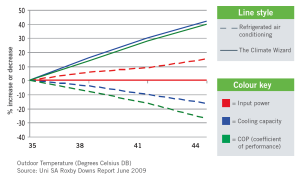
Then there are your peak demand charges from your energy provider. Refrigerated systems reach their peak power consumption on the hottest days, which are also the days when everyone is using their AC. You’re basically getting hit twice on your electricity bills.
Indirect evaporative systems’ power stays relatively flat regardless of outside temperature, so there’s no demand spike. In fact, their cooling capacity actually improves as temperatures rise, making them ideal for hot days.
What Increases Commercial HVAC Operating Costs
Poor Building Envelope
Gaps, uninsulated roofs, and poorly sealed doors force your HVAC system to work harder than it should. You could also be losing cool air from high internal heat loads from equipment and lighting. Without proper load management or zoning, these can quietly drive up cooling demand and operating costs every day.
Before specifying a new system, it’s worth assessing your building envelope first.
System Oversizing or Undersizing
Getting system size wrong costs money in both directions. Oversized units hit the setpoint quickly, switch off, then restart constantly, with each startup drawing a surge of power. Meanwhile, undersized units run at full load continuously and struggle to keep up on peak days.
Lack of Zoning and Poor Scheduling
Running a full commercial HVAC unit across an empty building after hours is one of the most common and avoidable cost blowouts. BMS integration, programmable timers, and zone-based controls can significantly reduce that waste.
Most commercial HVAC units include built-in scheduling features, and it’s important to configure them properly. Without proper startup, shutdown, and setback periods, systems run unnecessarily at full capacity during unoccupied periods.
Deferred Maintenance
Dirty filters, degraded heat exchanger cores, and blocked drains all reduce the efficiency of your HVAC unit. A poorly maintained unit draws similar or higher power while delivering less cooling output.
It’s important to service your unit regularly. Otherwise, you’re paying the same electricity bills for lower output.
Wrong Technology for the Climate
It’s important to choose the right system for your climate. For example, we’ve spoken about how indirect evaporative systems perform better as temperatures rise. In some cases, a hybrid solution can deliver the best HVAC performance. In humid climates, a Climate Wizard unit can handle the bulk of the cooling load, while your DX system provides final-trim cooling and maintains precise setpoint temperatures.
What the Numbers Look Like Across Six Australian Buildings
These case studies show how choosing the right commercial HVAC unit has saved six Aussie buildings on running costs over time.
Bunnings Alice Springs: 93% Lower Cooling Energy in 40°C Heat
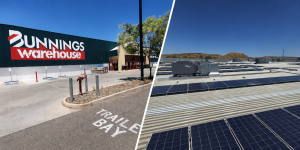
Bunnings operated a 5,835 m² open-plan retail store in one of the hottest parts of Australia – Alice Springs. The installation of 21 x CW-H15S Plus units delivering 592 kW of total cooling capacity resulted in:
- A 93% reduction in annual cooling energy compared to a refrigerated system
- A 72% cut in peak power demand
- Approximately $70,600 in annual operating cost savings.
Schinella’s Market SA: 71% Power Saving Without Compromising Produce
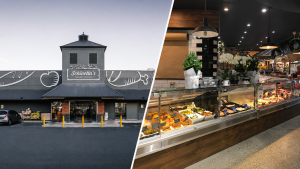
Schinella’s Market is a fresh produce market in South Australia that requires stable, low-humidity air year-round. By installing four CW-H15 units running as standalone cooling, it delivered:
- A 71% reduction in power demand versus an equivalent refrigerated system
- 34,000 kWh annual savings
- Consistent dry airflow also extended shelf life for fresh produce.
Tesla O’Connor WA: 72% Peak Power Reduction Across a 2,310 m² Workshop
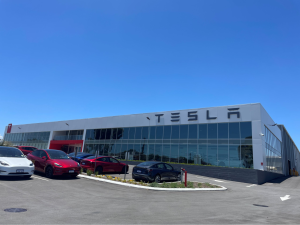
Tesla’s O’Connor workshop had high ceilings and frequent large door movement. Eight CW-H15S Plus units were installed to deliver:
- 180 kW of cooling at 16.2°C supply air
- Achieved a 72% reduction in peak power demand compared to a DX system
- Savings of 46.8 kW at peak periods
83 Pirie Street Adelaide: 79% Input Power Saving Across a 17-Level Office Tower
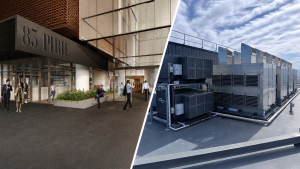
This was a 30,000+ m² commercial office tower targeting Platinum WELL, 6 Star Green Star, and 5.5 Star NABERS certification. Six CW-H15S Plus and four CW-80 units were installed to provide:
- 37,300 L/s of pre-cooled outside air
- 79% reduction in peak input power versus baseline DX
- Savings of 352,000 kWh annually
- All three certifications were achieved
KFC Goodna QLD: Indirect Evaporative Cooling in a High-Humidity Kitchen Environment
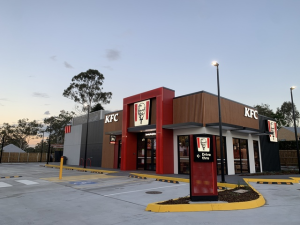
This KFC in Queensland generates significant heat around commercial exhaust hoods. A CW-H15S Plus (Supercool) was installed to provide cooled make-up air directly to the kitchen exhaust system. Here’s what it achieved:
- Reducing kitchen temperatures during peak hours
- Cutting the load on existing HVAC equipment
- Improving air quality in both the kitchen and dining areas
South Australian Sports Institute: IEC and Pre-Cooling Across a High-Performance Sports Hub
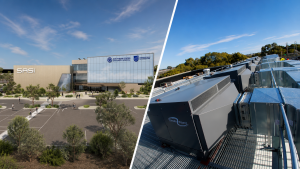
A new SASI facility at Mile End required separate climate solutions for a basketball/netball court and a Movement Studio. A standalone IEC system with integrated duct heaters serves the court year-round, while an IDEC pre-cooling system feeds the Movement Studio’s air-handling unit, reducing the AHU’s cooling load during high-activity periods. All units are integrated with BMS for centralised control and performance monitoring. Here’s what the units achieved:
- COP of 22.4 in 40°C heat vs approximately 2.5–3 for a refrigerated system doing the same duty
- Around 7 to 10x more efficient on Adelaide’s hottest days
- Supply air temperature 12–16°C in summer months
Key Takeaway
Your commercial HVAC choice affects your operating costs, and results from Aussie companies show this. If you want to see what the numbers look like for your building, our team at Seeley International can assess your building requirements and recommend the right system that’ll last you for decades.
Explore Seeley International’s commercial HVAC range or contact a commercial engineer today.
Frequently Asked Questions
How do I know if my commercial HVAC system is costing me more than it should?
If your commercial HVAC system is more than 10 years old, its operating cost is generally higher than a newer model. Modern HVAC models offer more energy-efficient components and lower-impact refrigerants that reduce the running cost. They also combine multiple technologies instead of relying on a single piece of equipment, making them more efficient.
What’s the biggest factor in running costs, the system itself or how the building is set up?
Both the HVAC system and the building drive running costs. Your system’s age and efficiency rating play a big part in how much it costs to run every day. On top of that, how well it’s maintained and how smartly it handles peak versus off-peak load both also make a real difference. For the building, it’s the airtightness and design.
What’s the difference between indirect evaporative cooling and a standard refrigerated system?
Indirect evaporative cooling splits airflow into two separate streams using a heat exchanger. The first stream (known as the working-air stream) uses evaporation to absorb heat, then is discharged outside as warm, humid air. The second stream filters and cools outdoor air before supplying it to the indoor space.
Refrigerated systems use a synthetic refrigerant (like R410 or R32) cycled through four parts: the evaporator absorbs indoor heat, the compressor pressurises the gas, the condenser releases that heat outside, and the expansion valve resets the refrigerant before it repeats the cycle.
Does evaporative cooling work in humid Australian climates, or only dry ones?
Yes, evaporative cooling can work in certain humid parts of Australia. But very high humidity can reduce how effectively it cools your building, especially if the humidity is consistent. Evaporative cooling is generally best suited for dry climates.
How much can switching systems actually save, and how long does payback take?
It is difficult to say exactly how much, as cost savings depend on how the system is used, its size and your outdoor temperatures. However, in situations where Climate Wizard is used for pre-cooling, we commonly record energy savings of around 50%. In standalone cooling applications, savings can be as high as 80%. We also record that Climate Wizard systems that are integrated into an HVAC solution have shown a 30% energy efficiency improvement.
What’s COP and why does it matter more than the upfront price?
COP (Coefficient of Performance) is a measure of how efficiently a cooling system converts energy into cooling output. A higher COP means the system produces more cooling for every kilowatt of electricity used.
HVAC systems with a higher COP consume less electricity to deliver the same cooling output, which costs you less to operate. A lower-priced commercial HVAC system with a higher COP can cost you more to operate because it consumes significantly more energy.
Do I need to replace my whole system, or can I add evaporative cooling alongside what I already have?
You don’t need to replace your whole HVAC system. Some evaporative cooling systems can frequently be used as a substitute for existing HVAC equipment. However, you’ll need to carefully plan and design this, as evaporative and refrigerated cooling systems operate very differently and do not work together. The right setup depends on your building, climate, and occupancy. Speak to our engineers if you’d like us to assess your building.
What building certifications does indirect evaporative cooling support?
Systems such as Climate Wizard meet various building certifications in Australia, namely: Green Star (Australia), NABERS (Australia), WELL Building Standards, LEED (Leadership in Energy and Environmental Design), and BREEAM (Building Research Establishment Environmental Assessment Method). The Climate Wizard engineers can guide you in meeting Australian standards such as AS 1668.1 and AS 1668.2 in mechanical ventilation and air conditioning, and the National Construction Code (NCC).