


Compare commercial HVAC systems for large buildings and how Climate Wizard delivers fresh air efficiency.
Most large commercial buildings face common HVAC challenges: stale recirculated air, rising energy costs, and declining indoor air quality. Left unresolved, these issues can impact occupant comfort, productivity, and operating expenses.
Indoor air quality has a direct effect on how employees and customers think, concentrate, and feel throughout the day. That’s why investing in a commercial HVAC system with fresh air ventilation is one of the smartest upgrades building owners and facility managers can make.
Modern commercial HVAC systems can improve airflow, reduce energy consumption, and create a healthier indoor environment, all while helping to lower long-term operating costs. Best of all, implementing a system that introduces fresh outdoor air is often simpler and more cost-effective than many building owners expect.
Why Fresh Air Efficiency Matters for Indoor Air Quality in Commercial Buildings
Fresh-air commercial HVAC systems deliver 100% outside air to occupants in your building. Most refrigerated systems recirculate indoor air to reduce the costs of cooling. But this shortcut usually comes at a cost.
Our research into indoor air quality in commercial buildings shows the real impact of recirculating air on occupants: elevated CO2 levels, reduced occupant comfort, and increased particulate matter. These airborne compounds will accumulate, especially in food service areas and in buildings with high occupancy.
Businesses are also facing more pressure to meet IAQ standards, such as ASHRAE 62.1, WELL, NABERS IAQ, and Green Star. Certifications have become a top priority for competitive businesses that want to build stakeholder trust.
How Indirect Evaporative Cooling Works in Commercial HVAC Systems
Indirect evaporative cooling uses a heat exchanger to cool warm outside air without adding moisture or relying on harmful synthetic refrigerants. Warm air passes through the system, has its heat drawn out through a separate evaporation process, and comes out the other side cool and dry, ready to be delivered straight into the building.
Climate Wizard is an example of such a technology. It uses water as its natural refrigerant rather than synthetic refrigerants and is 100% fresh-air cooling. The system operates in a continuous loop to draw in, filter, and cool outside air while diluting and replacing stale indoor air.
During hotter days, most refrigerated commercial HVAC systems work harder and draw more power, but systems like the Climate Wizard actually become more efficient. The hotter the outside air, the greater the temperature differential across the heat exchanger, and the more efficient the cooling becomes.
If you’re looking for a commercial HVAC system, take note of the system’s Coefficient of Performance (COP). For large buildings, even a modest COP improvement translates into thousands of dollars in annual savings and a shorter return-on-investment period. Here’s the difference between a standard refrigerated air conditioning system and the Climate Wizard.
| COP Measurement | |
| Standard Commercial Refrigerated HVAC System
Typically between 3.0 and 5.0 |
Climate Wizard
As a standalone application: Up to 12 Pre-cooling configurations: Up to 23 |
Factors to Consider When Choosing a Commercial HVAC System
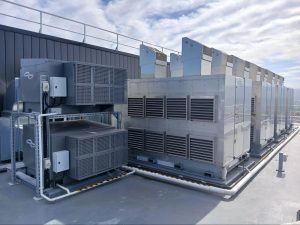
Building size and layout impact ventilation performance and airflow
The size and layout of your building play a critical role in determining the most effective commercial HVAC system. Open-plan offices, warehouses, retail spaces, and facilities with enclosed rooms all have different airflow and ventilation requirements. High-traffic areas with frequent door openings can also lose conditioned air quickly, increasing cooling demand and energy consumption.
That’s why it’s important to choose a system designed for your building’s unique footprint. Solutions like the Climate Wizard are available in a range of capacities to accommodate diverse commercial building sizes, layouts, and occupancy levels while maintaining consistent indoor comfort and air quality.
Your local climate influences your HVAC performance & system choice
Your local climate can significantly affect HVAC efficiency and operating costs. Indirect evaporative cooling systems perform exceptionally well in hot, dry, and temperate climates, delivering energy-efficient cooling with high volumes of fresh air.
In more humid or subtropical regions, the Climate Wizard is often used as a pre-cooling solution alongside a conventional refrigerated air-conditioning system. In this configuration, the indirect evaporative cooler handles the majority of the cooling load, while the refrigerated system provides final temperature control. This hybrid approach can improve energy efficiency and reduce overall cooling costs.
Compare running costs, not just upfront investment
When evaluating commercial HVAC systems, it’s important to consider total lifecycle costs rather than focusing solely on the initial purchase price. While refrigerated systems may appear more affordable upfront, long-term operating expenses can be substantially higher, particularly in large commercial buildings.
A key performance metric is the Coefficient of Performance (COP), which measures how efficiently a system converts electricity into cooling. Higher COP values generally indicate greater energy efficiency and lower operating costs. Advanced indirect evaporative cooling technologies, such as the Climate Wizard range, can reduce running costs by up to 80% compared with traditional refrigerated systems, depending on operating conditions.
Indoor air quality requirements vary by industry
Different industries have unique indoor air quality (IAQ) and ventilation requirements. Facilities such as warehouses, gyms, education centres, and large retail stores often require high airflow volumes to maintain occupant comfort and air quality.
Industries including pharmaceutical storage, food processing, manufacturing, and printing may also require additional humidity and moisture management controls to protect products, processes, and compliance requirements. Choosing a system that aligns with your operational needs can improve both workplace conditions and business performance.
Consider Integration with Existing HVAC Equipment
Upgrading your HVAC infrastructure doesn’t always require a complete system replacement. Many businesses can improve performance through a commercial HVAC retrofit, integrating new technologies with existing equipment.
For example, the Climate Wizard can be integrated with existing rooftop packaged units and air handling systems to enhance ventilation, improve indoor air quality, and reduce cooling loads without a full HVAC overhaul. If you’re unsure, consider speaking to one of our commercial HVAC engineers.
Which HVAC System Suits Your Commercial Building?
| Building Type | Examples | Recommended Model | Capacity |
| Small to medium commercial | Retail stores, offices, commercial kitchens, leisure centres, public facilities | Climate Wizard CW-6S | 14kW |
| Medium to large commercial | Schools, factories, medical facilities, pharmaceutical storage, food production, sport and leisure centres | CW-H15 series / CW-H15S Supercool | Up to 31kW / Up to 50kW |
| Large open spaces | Warehouses, gyms, large-format retail | CW-80 / CW-80 Hi-Cap | Up to 234kW |
| Critical and high-volume industrial | Large-scale manufacturing, food processing | CW-80S Supercool / CW-X / CW-XR series | Up to 261kW / Up to 255kW (pre-cooling) |
Small to medium commercial spaces
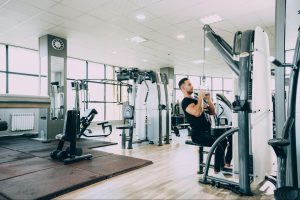
The best commercial HVAC systems for retail stores, offices, commercial kitchens, and leisure centres with moderate footprints are compact indirect evaporative units. The Climate Wizard CW-6S is best for this, with a 14kW capacity and compact form.
Medium to large buildings

Larger enclosed spaces need better airflow volume and air temperature control. Some buildings may also want to consider humidity management. HVAC systems like the CW-H15 series and CW-H15S Supercool are ideal, with the Supercool suited to pharmaceutical storage or food production.
Large open spaces
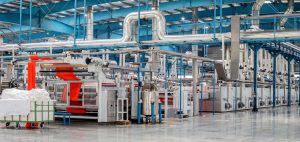
High ceilings, frequent door movement, and large floor areas need serious airflow capacity without energy costs spiking on hot days. Systems like the CW-80 and CW-80 Hi-Cap have stainless steel construction and use up to 80% less energy than refrigerated systems.
Critical environments and high-volume industries

For businesses looking at better temperature and humidity control, the CW-80S Supercool and CW-X/CW-XR are your best bet. These commercial systems offer precise climate control and serious energy savings.
Key Takeaway: How to Choose The Right Commercial HVAC System
Choosing the right commercial HVAC system depends on several factors, including your building type, local climate, indoor air quality requirements, energy efficiency goals, and long-term operating costs. The best solution is one that delivers reliable comfort while supporting healthy indoor environments and sustainable building performance.
While indirect evaporative cooling systems may not be suitable for every application, they are an excellent option for many commercial buildings seeking improved indoor air quality (IAQ), lower energy consumption, and greater ventilation performance. By delivering high volumes of fresh outside air, systems such as the Climate Wizard can help businesses reduce operating costs while creating healthier and more comfortable spaces for occupants.
If your organisation is looking for a more energy-efficient alternative to traditional refrigerated air conditioning, it’s worth exploring whether the Climate Wizard is the right fit for your facility.
Speak with our commercial HVAC engineers today to arrange a free building assessment and no-obligation quote.
Frequently Asked Questions
How do I know if my commercial building’s HVAC system is affecting air quality or staff productivity?
It is not always easy to identify poor Indoor Air Quality (IAQ). A room can feel comfortable and still be short on fresh air. Watch for headaches, fatigue, trouble focusing, more sick days, or a stuffy office. We recommend installing air quality monitors that track CO₂, particulates, and VOCs to track your air quality. You should also consider investing in systems that bring in more fresh air, like Climate Wizard.
Does indirect evaporative cooling work in humid Australian climates, or only dry ones?
Indirect evaporative cooling works in humid climates, but extreme humidity does reduce its cooling power. The impact depends on how frequently the region experiences consistent high humidity and how the system is configured. Pairing an indirect evaporative cooler with a refrigerated direct expansion (DX) system is a smart choice that saves running costs in humid climates, as the indirect evaporative unit can handle most of the cooling load, leaving the DX system to provide only the final few degrees of trim cooling.
How does climate affect HVAC system choice differently for large commercial buildings compared to homes?
Climate consideration matters for both homes and large commercial buildings. However, commercial HVAC design is significantly more complex because of regulatory requirements, building standards, occupancy demands, and the nature of how it’s used. Commercial HVAC systems are typically designed and installed by mechanical engineers, while residential systems can usually be installed by a qualified air conditioning contractor. Ultimately, while climate plays a big part in both, commercial projects need a far more detailed and regulated design process than residential systems.
What’s the difference between indirect and direct evaporative cooling for commercial buildings?
Both direct and indirect evaporative cooling cool air by evaporating water, but they operate differently. Direct Evaporative Cooling (DEC) cools air by passing it through wet filter pads and is suitable for hot and dry climates. Indirect Evaporative Cooling (IEC), such as Climate Wizard, cools the incoming fresh air through a multi-directional heat exchange process. It produces cool, fresh air while keeping indoor humidity levels comfortable.
How does indirect evaporative cooling perform on the hottest days compared to a refrigerated system?
The performance of an indoor evaporative cooling system depends on outdoor heat and humidity. In dry climates, systems like the Climate Wizard work well even in extreme heat. However, indirect systems can’t guarantee a precise indoor temperature like refrigerated air conditioning can. Refrigerated systems maintain your indoor temperature regardless of the outdoor humidity or temperatures, but they also cost more to run.
Can indirect evaporative cooling meet Australian ventilation and IAQ standards for commercial buildings?
Yes, and systems like the Climate Wizard often exceed them. Because the Climate Wizard run on 100% outside air, they produce far higher ventilation rates than a standard recirculating system. You want to ensure that your systems meet Australia’s standards, like AS 1668.2:2024, which sets the minimum outdoor air and exhaust requirements for commercial buildings, and the National Construction Code.
Can I add indirect evaporative cooling to an existing refrigerated system, or does it need to be a full replacement?
You can definitely add indirect evaporative cooling to an existing HVAC solution, and it’s not necessary to replace the entire system. However, it must be carefully planned and designed. A commercial engineer can help you ensure your system components work together effectively.
What building types are indirect evaporative cooling systems best suited to?
There is no single building type that is ideally suited to indirect evaporative cooling. However, these systems are particularly effective in large, open spaces such as sports halls, food processing facilities, gyms, and industrial manufacturing facilities. Indirect evaporative cooling works best in buildings that need high volumes of fresh air and ventilation.